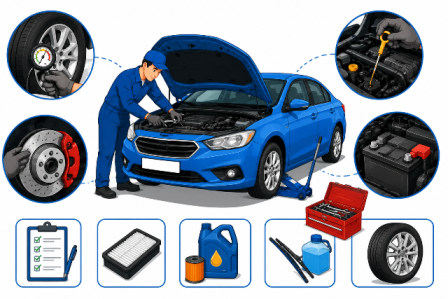
MySkillGame Presents
🚲 Road Safety Awareness

Safe Roads
Save Lives

A complete guide covering 18 critical road safety topics — from tyre maintenance and speed bumper standards to emergency first aid, school zone protection, and the life-saving Vehicle Emergency Alert Button.

18
Safety Topics
1
Goal: Zero Fatalities
60%
Accidents Are Preventable
🚨 Proposed Vehicle Safety System

The Vehicle Emergency Alert Button

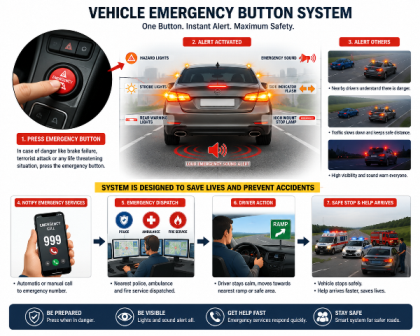
A dedicated panic button in every vehicle that triggers multi-modal emergency signals — alerting nearby drivers, pedestrians, and emergency services simultaneously when any life-threatening situation occurs.

▶ Interactive Demo — Click the button to simulate activation

Press to activate
Vehicle Emergency Alert Button (VEAB)
🔊

Emergency Horn Sequence

A distinct SOS pattern horn blast (3 short + 3 long + 3 short) continuously repeated — universally recognized distress signal.

Acoustic Alert
🔱

All-Round Emergency Lights

All four indicators, headlights, and rear lights flash simultaneously in a rapid stroboscopic pattern — visible from 300+ metres in daylight.

Visual Alert
📡

GPS Emergency Signal to 112

Automatically transmits vehicle location, speed, and registration to emergency services — no manual call needed during panic situations.

Digital Alert
🚌

Dashboard Warning Board

An illuminated "EMERGENCY — DO NOT APPROACH" display activates on the rear of the vehicle to warn following traffic of the crisis ahead.

Rear Warning

Situations that trigger the Emergency Alert Button

🚴 Brake Failure

Total or partial brake system failure — especially critical on highways or downhill sections where stopping is impossible.

🔐 Terrorist Threat / Carjacking

An armed intruder, carjacking, or hijack situation inside or threatening the vehicle — silent alert mode available.

⚡ Sudden Medical Emergency

Driver suffers a heart attack, seizure, or sudden loss of consciousness — the passenger can activate the button immediately.

🔥 Vehicle Fire

Smoke or fire detected — alerts surrounding traffic and emergency services to clear the area and dispatch fire response.

🚨 Loss of Steering Control

Mechanical failure of the steering system — warns surrounding vehicles to create space and avoid collision.

⏩ Runaway Vehicle

Accelerator stuck or vehicle unable to decelerate — continuous alarm warns pedestrians and drivers ahead to clear the path.

Proposed Design Standards

Physical requirements

Distinct red colour & cover guard

Covered by a flip guard to prevent accidental activation — like aircraft emergency controls.

Reachable by driver & co-passenger

Positioned on centre console or dashboard, within arm's reach for both front occupants.

Tamper-resistant & waterproof

Functions in rain, dust, and impact conditions. Battery-backed so it works even if the engine fails.

Signal specifications

Simultaneous multi-modal output

Sound + light + GPS signal triggered at the same moment — not sequential.

Deactivation requires key or code

Cannot be accidentally turned off while moving — requires deliberate deactivation to prevent misuse.

Mandatory in all commercial vehicles

Buses, trucks, taxis, school vans, and ambulances to be fitted as a legal requirement.

Policy Proposal: This Emergency Alert Button concept is proposed for mandatory fitment in all new commercial vehicles and optional in private vehicles. A standardised national protocol — similar to aircraft emergency transponders — would allow emergency services to respond instantly upon button activation anywhere on the national road network.

Jump to section

01 — Tyre Safety
Your tyres are your lifeline
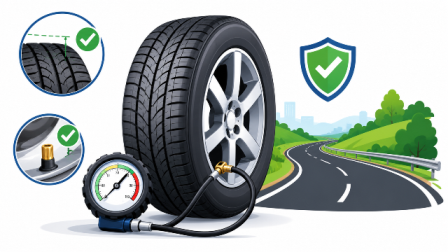
Tyre Safety
🔍

Tyres are the only point of contact between your vehicle and the road. Worn, cracked, or improperly repaired tyres dramatically increase crash risk.

When to replace

🔴

Worn tread

Loss of groove depth reduces grip and greatly increases wet-road skid risk and braking distance.

Cracks & cuts

Sidewall cracks, deep cuts, or brittle rubber mean structural failure — inspect immediately.

📈

Bulge or blister

A visible bulge indicates inner layer failure. Blowout risk is extreme and can occur without warning.

💨

Recurring pressure loss

Frequent air loss signals a tyre or valve defect requiring professional attention urgently.

🕐

Age over 5–6 years

Rubber degrades over time regardless of visible wear. Older tyres must be inspected by a professional.

Retreading safety

Acceptable when

Certified facility only

Licensed, quality-controlled workshops for heavy commercial vehicles.

Never do this

Damaged tyre retreading

Using substandard materials or unauthorized workshops causes tyre blasts and loss of control.

Maintenance checklist

Maintain correct tyre pressure
Avoid overloading the vehicle
Reduce sudden braking & sharp turns
Regular wheel alignment & balancing
Inspect before every long journey
Avoid prolonged heat exposure
Check spare tyre regularly
Use only quality, certified tyres
02 — Speed Bumper Standards
Unmarked bumpers are hidden hazards
Speed Bumper
🔍

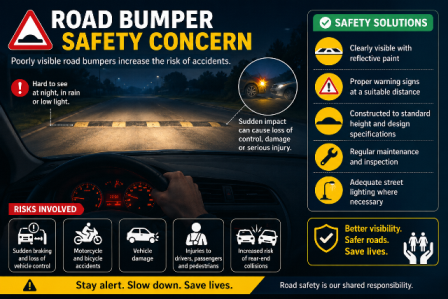
Poorly marked, unauthorized, or non-standard speed breakers cause accidents — especially at night, in rain, or in low-visibility conditions.

🚗

Sudden braking

Unexpected bumpers cause hard braking, rear-end collisions and loss of control.

🚵

Motorcycle risk

Two-wheelers are especially vulnerable to unlit or unmarked bumpers.

🔧

Vehicle damage

Non-standard heights cause repeated suspension, chassis, and tyre damage.

🚶

Pedestrian hazard

Loss of control on hidden bumpers can send vehicles onto footpaths and walkways.

Standards every speed breaker must meet

Reflective paint markings on both sides
Advance warning signs at adequate distance
Standard height & design specifications
Regular inspection & maintenance
Adequate street lighting
Official authorization from local authority
No unauthorized or excessively high bumpers
Clear road markings on approach & exit

Note: Unauthorized speed breakers — often built informally — increase accident risk. Local administration must enforce standardized design, height limits, and regular inspection for all road infrastructure.

03 — Accident Relief Space
Emergency escape ramps save lives
Escape Ramp
🔍

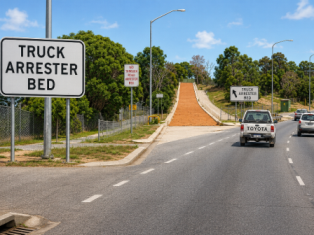
Used globally as Emergency Escape Ramps or Arrester Beds, these zones give drivers a last-resort option when facing brake failure or loss of control on dangerous road sections.

Surface materials

Deep sand beds

Gradually absorbs kinetic energy to slow vehicles safely.

Loose gravel

Creates friction and resistance to slow uncontrolled vehicles.

Energy-absorbing aggregate

Engineered materials maximising deceleration over distance.

When drivers use it

Brake failure

Completely failed braking system on steep or long descents.

Mechanical failure

Sudden loss of steering or engine control.

Loss of control

High-speed overshoot, blown tyre, or road instability.

Suggested installation locations

Steep downhill sections
Highway exits
Accident-prone curves
Heavy vehicle corridors
Near toll plazas
Major intersections
🟢

Fewer fatalities

Reduces lethal high-speed impact severity in uncontrolled situations.

🟢

Lower vehicle damage

Gradual deceleration protects the vehicle far better than direct collision.

🟢

Emergency option

Gives drivers a life-saving choice in panic situations on dangerous roads.

04 — Blind Spot Awareness
See the unseen — check your blind spots
Blind Spot
🔍

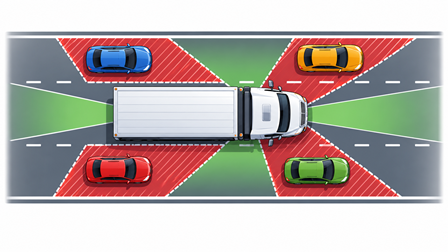
Blind spots are areas around your vehicle that mirrors and cameras cannot show. Failing to check them is a leading cause of lane-change and overtaking collisions.

👁

Rear-side zones

The area behind and beside you — missed by mirrors — hides motorcycles and cyclists.

🚗

Large vehicles

Trucks and buses have massive blind zones on all four sides. Never linger there.

👤

Pedestrians & cyclists

Near-side blind spots when turning left are especially dangerous for vulnerable road users.

🔊

Lane changes

Always physically turn your head to check — mirrors alone are insufficient before merging.

Adjust mirrors correctly before driving
Turn head to physically check before lane change
Use blind spot monitoring systems where available
Never linger in a truck's blind zone
Signal early and check twice before merging
Extra care when overtaking on narrow roads
05 — Night Driving Safety
Darkness multiplies every road risk
Night Driving
🔍

Night driving significantly reduces visibility, reaction time, and hazard recognition. A disproportionate number of serious accidents happen after dark.

🔆

Use headlights correctly

Switch to low beam when traffic approaches. High beam blinds oncoming drivers and is dangerous.

🔒

Reduce speed

Drive within your headlight range — you must be able to stop within what you can see ahead.

👀

Stay alert for fatigue

Drowsiness peaks at night. Stop and rest if drowsy — driver fatigue is as dangerous as alcohol.

🚤

Watch for pedestrians

Dark clothing at night makes pedestrians nearly invisible — scan wide and slow down in populated areas.

Clean windscreen & headlights before night travel
Avoid staring directly at oncoming lights
Increase following distance at night
Take regular breaks on long night journeys
Never drive if heavily fatigued — stop and rest
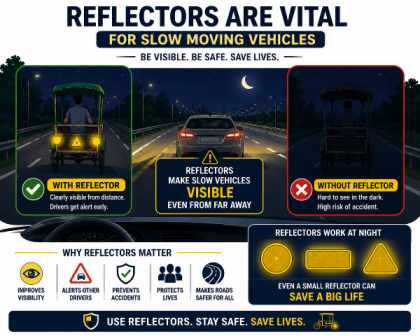
Use road reflectors & lane markings as guides
06 — Seatbelt & Helmet Compliance
Buckle up. Helmet on. Every time.
Seatbelt & Helmet
🔍

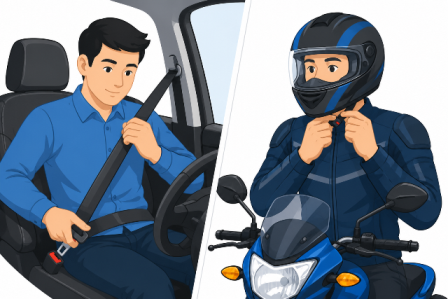
Seatbelts reduce the risk of death in a crash by up to 45%. Helmets reduce fatal head injuries for motorcyclists by over 70%. These are the simplest life-saving actions on the road.

Seatbelt rules

All passengers must buckle up

Front and rear seat occupants — seatbelts save everyone's life in a collision.

Children need proper restraints

Child seats appropriate to age and weight must be used correctly at all times.

No exemptions

Short journeys and slow speeds are no excuse — most fatal crashes happen close to home.

Helmet standards

Certified helmets only

Use ISI/BIS-certified helmets. Cheap, uncertified helmets provide minimal real protection.

Properly fastened chin strap

A helmet that falls off during a crash offers zero protection. Always fasten the chin strap.

Replace after any impact

Helmets that have absorbed a crash impact must be replaced even if visually undamaged.

Key fact: Wearing a seatbelt is the single most effective action a vehicle occupant can take to survive a crash. No airbag fully compensates for the absence of a seatbelt.

07 — Distracted Driving
Your phone can wait. Your life cannot.
Distracted Driving
🔍

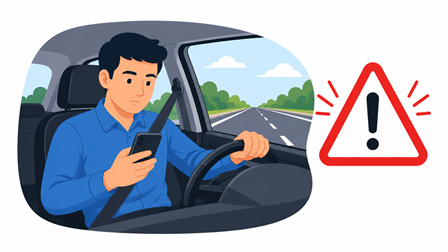
Using a mobile phone while driving is one of the most dangerous behaviours on the road. At 60 km/h, a 5-second phone glance means traveling over 80 metres blind.

📱

Mobile phone use

Texting while driving increases crash risk by 23 times. Calls reduce reaction time even hands-free.

🎧

Audio & navigation

Adjusting music, GPS, or infotainment systems diverts attention for dangerous seconds.

🍕

Eating & drinking

Consuming food while driving impairs control, reaction time, and awareness simultaneously.

👤

Passenger distractions

Intense conversations with passengers — particularly children — dangerously split driver focus.

Put phone on Do Not Disturb mode before driving
Use hands-free only — never hold the phone
Set GPS destination before you start moving
Pull over safely to make or receive calls
Never text, scroll, or read messages while driving
Eat and drink only when the vehicle is stationary
08 — Drunk & Impaired Driving
Even a small amount of alcohol impairs you
Drunk Driving
🔍

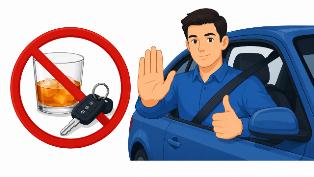
Alcohol is involved in a large proportion of fatal road accidents. Even at blood alcohol levels well below the legal limit, judgment, coordination, and reaction time are significantly impaired.

🍶

Impaired judgement

Alcohol reduces the ability to assess speed, distance, and risk — a dangerous combination on any road.

👁

Reduced vision

Blurred and tunnel vision means peripheral hazards — pedestrians, cyclists — go undetected.

Slower reaction time

At 60 km/h, a 0.5-second delay in reaction time means 8 additional metres of travel before braking begins.

😴

Drowsiness & blackout

Alcohol causes sudden microsleeps and full loss of consciousness — even at low doses combined with fatigue.

🚶

Overconfidence

Alcohol creates a false sense of control — impaired drivers consistently overestimate their own ability.

🚫

Legal consequences

DUI/DWI convictions carry heavy fines, licence suspension, imprisonment, and permanent record in most countries.

The legal limit is not the safe limit

0 is the safest limit

Many countries with the best road safety records apply a near-zero blood alcohol tolerance for drivers.

Medications also impair

Antihistamines, sedatives, and many prescription drugs cause impairment equivalent to alcohol.

What to do instead

Plan a designated driver

Agree before the event — never assume someone is "okay to drive" after drinking.

Use taxis, autos, or ride apps

The small cost of a safe ride is nothing compared to a life lost or permanently altered.

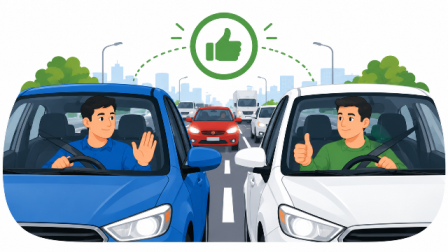
Remember: Impaired driving does not only risk your own life. Innocent pedestrians, passengers, and other drivers bear the consequences. If you drink, do not drive — no exceptions.

09 — Road Rage Management
Aggressive driving causes preventable accidents
Road Rage
🔍

Road rage — a state of aggressive or angry behaviour triggered by traffic frustration — has been directly responsible for thousands of deaths globally. It turns a traffic dispute into a life-threatening confrontation.

😡

Aggressive overtaking

Cutting in, tailgating, and dangerous overtaking manoeuvres born from frustration are a leading cause of head-on collisions.

🔊

Horn abuse & flashing

Excessive honking and light-flashing escalates tension and provokes retaliatory behaviour from other drivers.

🚵

Reckless lane changes

Anger clouds the ability to judge gaps and speeds — rage-induced lane changes happen without adequate margin.

Confrontation risk

Stopping to confront another driver has resulted in physical assaults and fatalities. De-escalation is always safer.

How to manage road rage — yours and others'

Leave earlier — time pressure triggers aggression
Do not respond to provocative gestures or horns
Avoid eye contact with an aggressive driver
Let aggressive drivers pass — do not compete
Play calming music and breathe consciously
Never stop to argue — drive to a public place if threatened
Report dangerous drivers to traffic police — don't confront them
If you feel rage building, pull over safely and pause

Key insight: Anger behind the wheel is a choice. No traffic dispute, cut-off, or horn blast justifies endangering lives. Staying calm is not weakness — it is the mark of a skilled, responsible driver.

10 — Railway Level Crossing Safety
A train cannot stop — you must
Railway Crossing
🔍

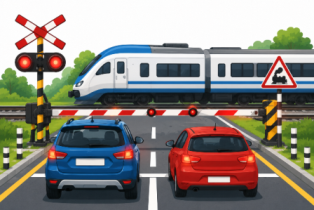
Railway level crossing accidents are among the most fatal road incidents. A train travelling at speed cannot brake in time to avoid a vehicle on the tracks. The responsibility to stop is entirely with the road user.

🚛

Never cross when barriers are down

Closed barriers mean a train is approaching or passing. Barrier or not — never cross when warning lights are active.

🔴

Flashing red lights mean STOP

Flashing red lights or an alarm bell are absolute signals. There are no exceptions — treat them like a red traffic signal.

🔊

Look both ways — even on single tracks

A second train may follow immediately. Always check both directions before crossing, even after a train has passed.

Never stop on the tracks

If your vehicle stalls on the tracks, exit immediately and move away — do not try to restart the engine.

🚫

Avoid overtaking at crossings

Never overtake a vehicle that has stopped at a level crossing — they may have a clear view of an approaching train that you cannot see.

🛠

Unmanned crossings need extra care

Slow to a near-stop, look and listen carefully, and proceed only when absolutely certain no train is approaching.

Key fact: A freight train travelling at 80 km/h requires over 1.5 km to come to a complete stop after emergency braking. When a vehicle is on the track, the train driver is helpless. Never gamble with a railway crossing.

11 — Emergency First Aid at Accident Sites
Act fast. The first minutes matter most.
First Aid
🔍

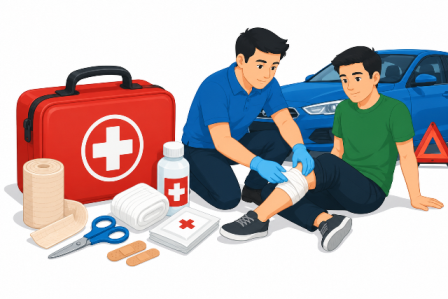
Bystanders who act quickly at accident scenes can prevent deaths. Knowing basic first aid can be the difference between life and death before ambulance arrival.

🚑

Call emergency services

Call 112 immediately. Provide exact location, number of casualties, and type of accident.

Secure the scene

Turn on hazard lights, place warning triangles, and prevent further vehicles from hitting the scene.

💊

Control bleeding

Apply firm, direct pressure to wounds using cloth. Do not remove the cloth — add more on top.

🤘

Recovery position

Place unconscious but breathing victims on their side to prevent choking on fluids.

Do not move spinal injuries

Unless there is fire risk — moving a spinal injury victim without support can cause paralysis.

💋

Psychological support

Speak calmly to conscious victims. Reassure them help is coming. Reduce panic and shock.

Important: Good Samaritan laws in many countries protect those who assist accident victims in good faith. Never hesitate to help — your action can save a life.

12 — Golden Hour Awareness
The first 60 minutes determine survival
Golden Hour
🔍

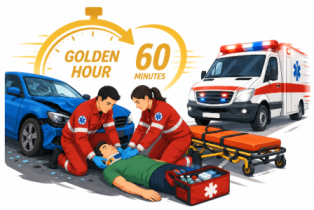
The "Golden Hour" is the critical period after a traumatic injury during which prompt medical treatment significantly improves the chances of survival and reduces permanent disability.

What happens in the golden hour

0–10 min: Scene safety & call

Secure scene, call 112, basic first aid begins — control bleeding, airway check.

10–30 min: Ambulance arrival

Paramedics stabilize vital signs, immobilize injuries, begin advanced care.

30–60 min: Hospital treatment

Surgical and trauma team intervention. Each minute of delay increases mortality risk.

How bystanders can help

Call immediately — don't wait

Many bystanders delay calling, hoping someone else will. Every second counts — call now.

Give precise location

Mention road name, landmark, and direction. Ambiguous locations waste precious minutes.

Clear the path for ambulance

Move vehicles out of the way to allow emergency vehicles to reach the scene quickly.

Key insight: Even a 10-minute delay in reaching definitive hospital care can reduce survival chances significantly for severe trauma injuries. Road clearance, fast calling, and bystander first aid are not optional — they are life-critical.

13 — Pedestrian Crossing Safety
Protect those on foot
Pedestrian Safety
🔍

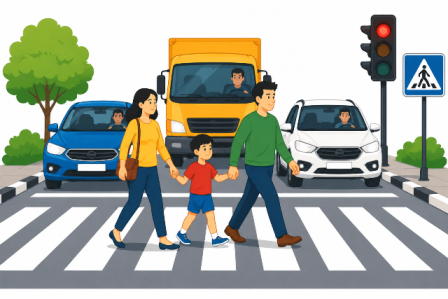
Pedestrians are the most vulnerable road users. Poor crossing infrastructure and driver inattention make crossing roads one of the most dangerous daily activities.

🚶

Use zebra crossings

Always cross at marked pedestrian crossings or traffic signals — never between parked vehicles.

🔴

Obey signals

Cross only on green. The first second of a green walk signal is the most dangerous — look before stepping.

👀

Make eye contact

Establish eye contact with the driver before crossing to ensure they have seen you and stopped.

Visible clothing at night

Wear bright or reflective clothing when walking near roads at night or in poor weather conditions.

Driver responsibilities

Always yield to pedestrians at crossings
Stop completely before the stop line
Never overtake a stopped vehicle at a crossing
Reduce speed in pedestrian-dense areas
Watch for pedestrians stepping out between vehicles
Extra caution for elderly and visually impaired
14 — School Zone Protection
Slow down — children are crossing
School Zone
🔍

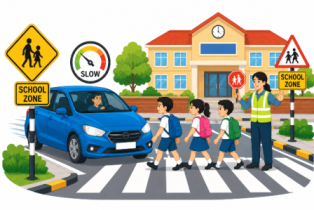
School zones require maximum vigilance. Children are unpredictable near roads — they dart out suddenly, misjudge vehicle speeds, and are difficult to see due to their small size.

🏭

Reduced speed zones

School areas should have enforced 20–30 km/h limits during school hours, clearly marked.

🚥

Crossing guards

Trained crossing guards or traffic wardens during peak school hours reduce child accidents significantly.

🔋

School bus safety

Never overtake a stationary school bus with flashing lights — children may be crossing on all sides.

🚩

Road markings

Brightly marked pedestrian crossings, rumble strips, and clear signage must be in front of every school.

Reminder: Speed cameras and traffic enforcement in school zones save children's lives. Drivers who speed past schools or block crossings must face strict penalties. A child's life is worth more than 2 saved minutes.

15 — Road Signage Standards
Signs save lives — if they're visible
Road Signage
🔍

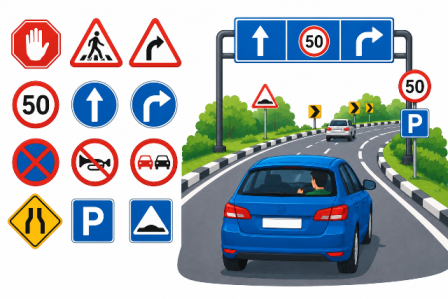
Faded, missing, obstructed, or non-standard road signs are a silent killer. Drivers rely on signage to make split-second decisions at junctions, curves, and speed zones.

Common sign failures

Faded or obscured signs

Vegetation, dirt, and weathering make signs unreadable — especially at night.

Missing warning signs

Lack of advance warning before sharp bends, rail crossings, or junctions.

Inconsistent standards

Non-standard sizes, colors, or symbols confuse drivers unfamiliar with local practice.

Standards to enforce

Retroreflective materials

All signs must use retroreflective sheeting to remain visible at night and in rain.

Regular maintenance schedule

Mandatory inspection cycle for all road signs by local authority every 6 months.

Standardized national system

All signs must comply with national standards — uniform color, size, symbol, and placement.

16 — Pothole Reporting System
Every pothole reported is an accident prevented
Pothole
🔍

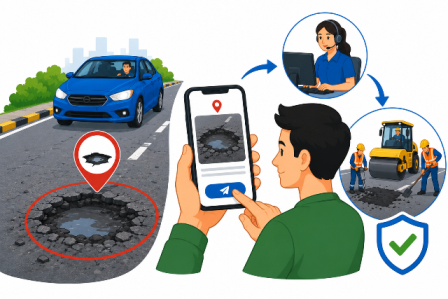
Potholes cause tyre blowouts, suspension damage, loss of vehicle control, and serious accidents — particularly for motorcycles and cyclists. A fast, accessible reporting system is essential.

🕳

Tyre & rim damage

Deep potholes cause immediate tyre blowouts and bent rims, especially at speed.

🚗

Loss of control

Sudden impact from a large pothole can jerk the steering wheel and cause accidents.

🚵

Motorcycle danger

A pothole that a car survives can throw a motorcyclist — especially at night or in the rain.

🔊

Swerving hazard

Drivers swerving suddenly to avoid potholes cause side-swipe and head-on collisions.

What a good pothole reporting system needs

Easy-to-use app or SMS reporting channel
Photo & GPS location submission
Tracking status from report to repair
Mandatory 48-hour response for severe potholes
Public dashboard showing open & closed reports
Accountability for delay in repairs
17 — Vehicle Maintenance & Brake Inspection
A well-maintained vehicle is a safe vehicle
Vehicle Maintenance
🔍

Mechanical failures cause a significant proportion of road accidents. Regular inspection and maintenance of brakes, lights, and steering is not optional — it is a safety obligation.

🔧

Brake system

Inspect brake pads, discs, and fluid regularly. Spongy brakes or increased stopping distance are danger signs.

🔆

Lights & indicators

All headlights, taillights, brake lights, and indicators must function correctly — checked monthly.

💡

Steering & suspension

Play in the steering wheel or unusual tyre wear indicates alignment or suspension problems.

💧

Fluid levels

Engine oil, coolant, brake fluid, and power steering fluid — check all before long journeys.

🤖

Wipers & windscreen

Worn wipers in rain can reduce visibility to near-zero. Replace every 12 months minimum.

🗼

Annual fitness certificate

All vehicles, especially commercial ones, must undergo mandatory roadworthiness inspection annually.
Service vehicle as per manufacturer schedule
Do not ignore warning lights on dashboard
Test brakes at slow speed before any long trip
Keep emergency kit: triangle, torch, first aid
18 — Emergency Helpline Information
Know the numbers. Save a life.
Emergency Button
🔍

In an emergency, every second counts. Memorize or save these numbers — and make sure your passengers know them too.

112
National Emergency
Police, Fire & Ambulance (India)
108
Ambulance Service
Free ambulance across most states
100
Police
Nearest police station dispatch
101
Fire Brigade
Fire & rescue services
1073
Road Accident Helpline
National Highway Authority
1033
NHAI Road Support
National highway assistance

Save these numbers now. Pin them on your phone's lock screen and keep a card in your vehicle's glove compartment. When seconds count, you won't have time to search for them.

"A tyre is not merely a vehicle component — it is a life-saving safety element. Every road sign, speed bumper, and escape ramp exists for one reason: to bring you home safely. Road safety is not someone else's responsibility — it begins with you."

Tyre Blowout Brake Failure Drunk Driving Unmarked Bumpers Night Hazards Distracted Driving Road Rage Seatbelt Use Golden Hour First Aid School Zone Escape Ramps Railway Safety

Spread Road Safety Awareness

Share this guide with your community, workplace, school, or local authority. Every person who reads it could prevent an accident — or save a life.

Read from the start Emergency helplines